Metiabruz:
Kings, Cuisine &
Industry.
The story, culture and industry of Metiabruz.
Metiabruz is a historic neighborhood in Kolkata, West Bengal, famous for its legacy as the 'Mini Lucknow' of Nawab Wajid Ali Shah and currently recognized as one of Asia's largest wholesale garment manufacturing hubs.
The Earthen Tower
Long before the hum of sewing machines defined the air, the banks of the Hooghly river were characterized by raised mud platforms and watchtowers. The name Metiabruz is a linguistic corruption of its original Urdu name, Matiya Burj, which translates directly to "earthen tower" or "mud bastion."
These humble earthen structures eventually served as the foundation for royal estates, setting the stage for one of the most dramatic cultural transformations in the region's history. Today, the mud bastions are gone, but the name remains as a testament to the soil that welcomed a king in exile.
Read the full historyA Mini Lucknow in Bengal
In 1856, the British East India Company annexed the wealthy kingdom of Awadh. The last Nawab, Wajid Ali Shah, was deposed and traveled to Kolkata. Detained by the outbreak of the 1857 rebellion and failing health, the Nawab settled in the Garden Reach area of Metiabruz on a British pension.
Refusing to let his culture die, he began transforming the neighborhood into Chhota Lucknow (Mini Lucknow).
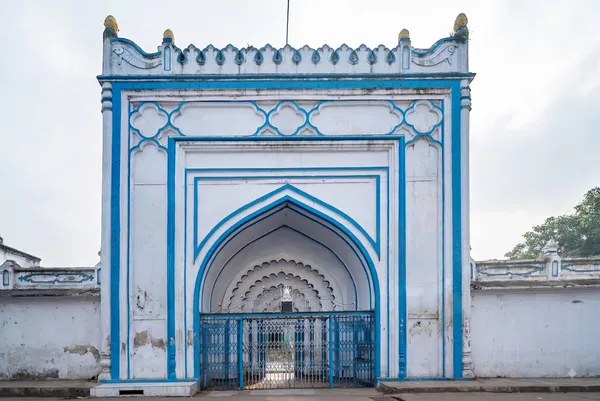
He constructed magnificent structures like the Sibtainabad Imambara and the Parikhana, and established an open-air zoo with exotic animals. The Nawab brought his entourage of poets, musicians, and artisans, making Metiabruz a sanctuary for Kathak dance and Thumri music.
The Golden Potato
Perhaps the most famous contribution of Metiabruz to the world is culinary. While living in exile, the Nawab's royal budget was severely constrained compared to his days of absolute power. Yet, his large entourage and royal gatherings demanded the grandeur of Awadhi feasts.
"To maintain the sheer volume of the biryani without bankrupting the royal treasury, the khansamas introduced a radical new ingredient: the potato."
At the time, the potato was an exotic, novel tuber brought to India by the Portuguese. The ingenious cooks discovered that adding large chunks of potato to the dum pukht (slow-cooked) biryani allowed it to absorb the rich meat juices, saffron, and spices.
It increased the volume beautifully while adding a melt-in-the-mouth texture. What began as an economic compromise in exile became the defining signature of the Kolkata-style Biryani.
The Garment Empire
Royal Origins
The foundation was laid by the highly skilled tailors and embroiderers who migrated with the Nawab. Over generations, they transitioned from bespoke royal garments to commercial tailoring, initially selling their wares at the distant Howrah Haat.
The 1982 Catalyst
A devastating fire destroyed the Howrah Haat in 1982. Forced to adapt, the Metiabruz business community established their own local markets—Jabbar Haat, ABM Haat, and Janata Haat—sparking an unprecedented era of growth and self-reliance.
Global Scale
Today, Metiabruz houses over 15,000 manufacturing units producing an estimated 10–15 crore garments annually. Specializing in children's wear, this economic juggernaut exports across India, the Middle East, Africa, and beyond.
Explore the Knowledge Base
Frequently Asked Questions about Metiabruz
What is Metiabruz famous for?
Metiabruz is famous for two main things: being the historical sanctuary ("Mini Lucknow") of the exiled Nawab Wajid Ali Shah where the Kolkata Biryani was invented, and presently being one of Asia's largest wholesale readymade garment manufacturing hubs.
Why is it called Metiabruz?
The name Metiabruz is a linguistic corruption of the Urdu words "Matiya Burj," which directly translates to "earthen tower" or "mud bastion." It was named after the raised mud platforms and watchtowers that originally characterized the Hooghly riverbank in the area. (See more from @halfpanthistory).
How did the garment industry start in Metiabruz?
The garment industry originated from the highly skilled tailors and embroiderers (Ostagars) who migrated with Nawab Wajid Ali Shah in 1856. After his death, they transitioned from making royal garments to commercial tailoring, eventually establishing the massive readymade garment hub seen today.
The Metiabruz Publication
Join our newsletter to receive deeply researched essays on the history, culture, and future of the region.